One shared workflow map
The people, systems, suppliers, evidence and approval boundaries involved in the work.
Property operations consultancy
Thrive maps and improves the workflows behind repairs, compliance, resident service and portfolio reporting. We start with the work, then decide whether the right answer is a clearer process, better-connected systems, automation or AI.
Map a property workflow
The people, systems, suppliers, evidence and approval boundaries involved in the work.
Elapsed time, rework, avoidable contact, backlog and the exceptions that consume expert attention.
Process change, integration, rules-based automation or AI, with a pilot scope only when the evidence supports it.
Give coordinators one view of the report, photographs, history, access details and supplier activity. Make delays and missing information easier to see.
Bring inspections, certificates, contractor updates and policy requirements into a traceable record that shows what is due, missing or waiting for approval.
Help service teams acknowledge issues, prepare accurate updates and agree next steps without asking people to repeat information.
Combine property, cost, occupancy, condition and work-in-progress data into current views that managers can use.
A repair, inspection or lease event can be logged and still stall. We trace the full case to find where information, elapsed time and ownership are lost.
What gets in the way
The resident account, photographs, repair history, asset data and contractor notes live in different places. The next person receives a work order without enough context to act safely.
Assigned does not mean acknowledged, and scheduled does not mean agreed. Status labels can hide stalled approvals, unclear ownership and missed contractor handoffs.
Inspection records, certificates, remedial actions and supplier updates are hard to reconcile. Owners cannot quickly see what is current, missing or overdue.
Technology can gather evidence, prepare a chronology and suggest a route. Safety, legal and high-value commercial decisions still need traceable sources and a person who can reject the suggestion.
How we work
We work with real cases and the people who carry the process. The aim is a useful operational change, not an AI demo.
Follow ordinary and difficult cases from the initial report or request through to resolution, including systems, suppliers and approval boundaries.
Choose the smallest change that reduces avoidable delay or risk, whether that is a clearer rule, better information, integration, automation or AI.
Run in shadow or limited mode, compare with the baseline and expand only when the operational evidence supports it.
Practical property workflows
Representative workflow examples, not client case studies. A strong first project is narrow enough to measure, important enough to matter and owned by the people who do the work.
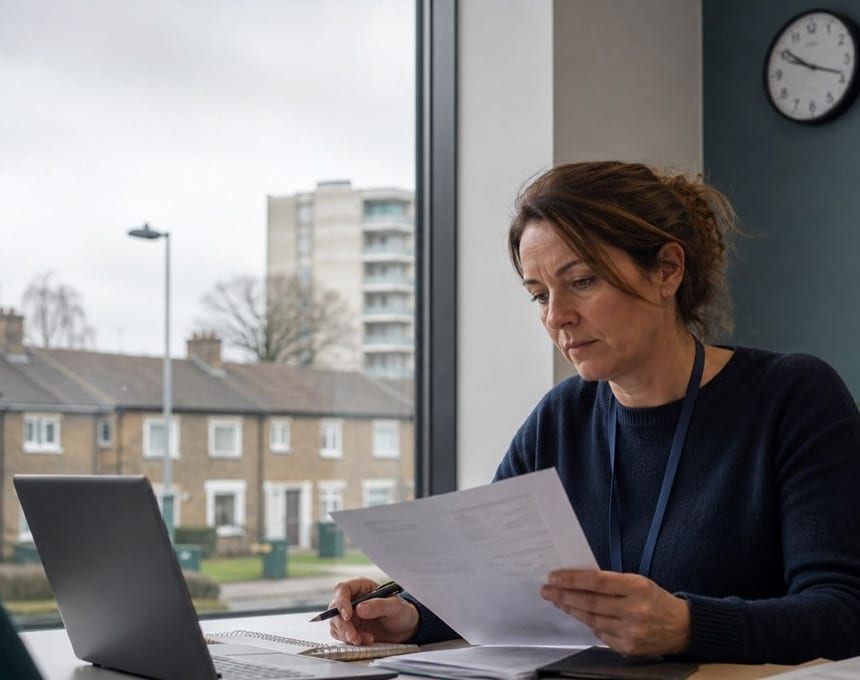
Bring the report, evidence, access details, repair history and supplier activity into one traceable case. Surface missing information and stalled handoffs before they become another queue.

Connect inspection records, certificates, remedial actions, contractor updates and due dates so the accountable team can see what needs attention.

Create current views of cost, occupancy, condition and work in progress from the systems teams already use, with the source of each figure clear.
Property operations questions
A review can cover repairs intake, contractor handoffs, inspections, compliance evidence, resident communication, lease events or portfolio reporting. We focus on one recurring workflow so the delays, ownership gaps and evidence requirements are specific enough to act on.
Yes. We can trace a repair from the first report through triage, access arrangements, contractor activity, updates and closure. The aim is a complete case, clear ownership and fewer avoidable handoffs.
Technology can connect inspections, certificates, remedial actions and due dates, then show the source behind each status. Accountable people still approve safety, legal and commercial decisions, with clear escalation paths for exceptions.
Not necessarily. The right intervention may be a clearer process, better ownership, improved data, system integration or rules-based automation. We recommend AI only where it adds measurable value and can operate with suitable controls.
It produces a shared view of the workflow, the points where time or evidence is lost, a baseline for measurement and a recommendation for the next sensible change. Your team keeps the map.
We agree the operational measure before the pilot, test ordinary and difficult cases, and compare the result with the current process. Scaling follows the evidence, not the quality of the demo.
Bring one recurring process to an initial conversation. We will discuss where work stalls, what evidence goes missing and whether a focused workflow review is the right next step.
Map a property workflow